Tracking People and Assets in Real Time on a Single Platform: Why Two Systems Cost You Twice
Running separate people and asset tracking systems doubles infrastructure and hides the answers you need. Here is what a unified RTLS platform changes.
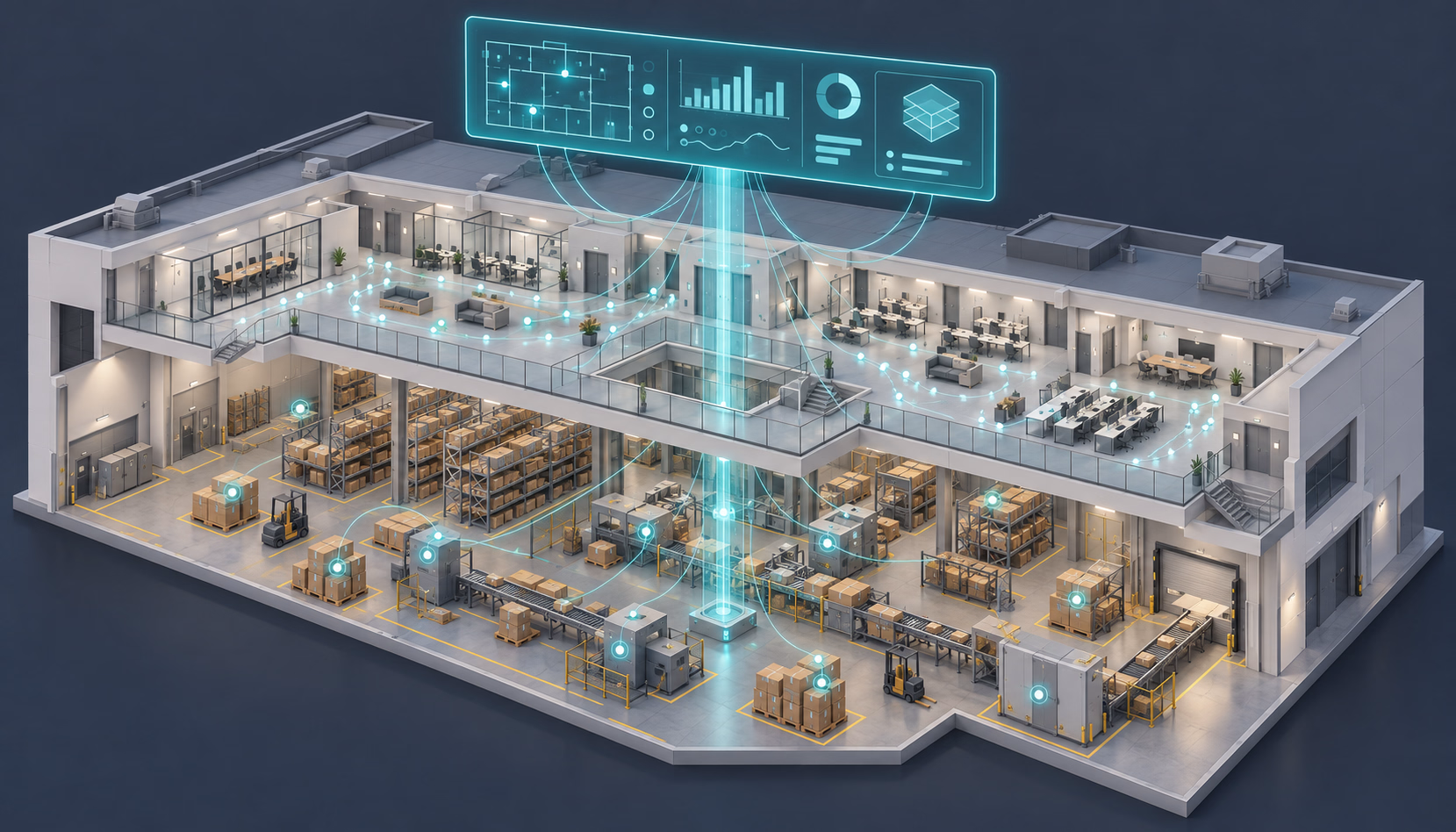
A large hospital we can describe generically had two location systems. One tracked infusion pumps and wheelchairs, bought by biomedical engineering in 2021. One tracked staff duress alarms, bought by security in 2023. Different tags, different ceiling hardware, different dashboards, different vendors, two support contracts.
When a nurse pressed a duress button, the security system knew where she was. It did not know that the nearest three colleagues were two rooms away, because that was the other system. Nobody could answer the question that mattered in the ten seconds it mattered.
This is the normal outcome, not an unusual one. Location gets bought as a feature of something else — asset management, access control, safety — and each purchase brings its own infrastructure.
What the duplication actually costs
Anchors twice. The expensive part of an indoor location system is rarely the software. It is the ceiling work: mounting, cabling, power, commissioning, and the site survey that determines where everything goes. Two systems means paying for that twice in the same building.
Surveys twice. And two sets of assumptions about the same radio environment, which will disagree.
Integration twice. Every downstream system — the CMMS, the HR directory, the incident reporting tool — needs connecting to both.
Reconciliation forever. Two systems will produce two different answers about the same floor at the same moment, and someone will spend their Thursday afternoons working out which one is right.
The questions only a unified platform can answer
Cost is the dull argument. The interesting one is that certain questions are structurally unanswerable when people and assets live in separate databases.
Who is nearest to this equipment right now? The foundation of every dispatch decision, and it requires both data sets in one query.
Which assets left the building with which person? A loss prevention question that is trivial when the streams are joined and impossible when they are not.
Was this restricted asset handled by someone certified to handle it? Compliance evidence that requires identity, location and time together.
Where do people and equipment queue for the same space? The bottleneck analysis that actually changes a layout.
During the incident, who was in the affected zone and what was in there with them? The question a safety investigator asks, reconstructed from one timeline rather than two.
Each of these is a join. Joins across vendors, through two APIs, with clocks that drift relative to each other, are the sort of project that gets scoped and then quietly dropped.
What unified does not mean
It does not mean one tag for everything. A person’s badge and a pallet tag have different form factors, different battery expectations and different beacon intervals, and they should.
It does not mean one permission set. People data needs stricter access control than asset data, and a platform that treats them identically has got it wrong in the other direction. What you want is shared infrastructure and shared coordinates, with governance that distinguishes sharply between a person and a pump.
If you already have two
Nobody rips out working infrastructure on principle. The realistic path is to unify at the data layer first. Get both streams into one platform, on one floor plan, on one clock. Then let the hardware converge naturally at refresh, as tags reach end of life and anchors need replacing.
The test of whether it worked is simple. Ask your operations lead the nearest-responder question and see whether they open one screen or two.